Talking the Talk: How Black Donnellys Gave Hell's Kitchen Its Own Voice

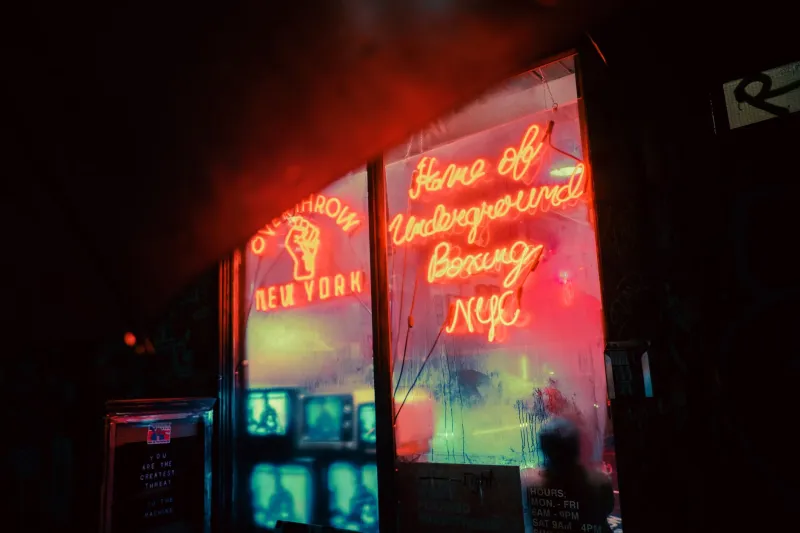
Photo: Dllu, CC BY-SA 4.0, via Wikimedia Commons
There's a moment early in the series where Tommy Donnelly says something so plainly, so without drama, that it almost doesn't register as significant. And then it sticks with you. That's the trick the show kept pulling off — not through speeches or monologues, but through the texture of everyday speech. Black Donnellys understood something a lot of crime dramas miss: the way people talk is the world they live in.
While shows like The Sopranos leaned into a kind of operatic mob vocabulary and The Wire constructed its own elaborate street code, Black Donnellys went in a different direction. It reached for something grittier, more casual, more neighborhood. The language of the Donnelly brothers wasn't borrowed from Hollywood gangster mythology. It came from the block.
The Anti-Mob Vocabulary
Here's what's interesting about the show's dialogue: it almost deliberately avoids the kind of stylized crime-drama speak audiences had been trained to expect by 2007. Nobody's delivering carefully constructed philosophical monologues about loyalty and betrayal. The Donnelly brothers argue the way brothers actually argue — cutting each other off, going in circles, saying the wrong thing and not walking it back.
Kevin in particular is a masterclass in working-class verbal rhythm. His lines tumble out with a kind of nervous energy that never quite resolves. He's always explaining himself, always mid-justification, always one sentence away from digging himself deeper. That's not an accident. The writers gave each brother a distinct verbal fingerprint, and Kevin's is all run-on anxiety.
Jimmy talks in short bursts, like he's conserving something. Sean is warmer, more open — his dialogue has a softness the others don't carry. And Tommy? Tommy's the one who chooses his words most carefully, which makes the moments when he doesn't hit harder.
Joey Ice Cream and the Art of Unreliable Narration
You can't talk about the show's language without talking about Joey Ice Cream. As the story's narrator, Joey occupies a weird, wonderful linguistic space. He's telling you things he may or may not have witnessed directly, filtering Hell's Kitchen through the perspective of a guy who's genuinely not sure how much of what he's saying is accurate.
That narrative voice — rambling, self-interrupting, occasionally contradicting itself — was a bold structural choice. Most crime dramas that use narration go for something authoritative, something that lends the story weight and credibility. Joey's narration does the opposite. It keeps you slightly off-balance, which turns out to be the perfect way to experience a show about people making increasingly bad decisions for reasons that almost make sense.
His speech patterns also serve as a kind of linguistic anchor to the neighborhood. Joey talks about people and places the way someone would who's lived in the same ten blocks his whole life. There's an intimacy to his references, a shorthand that assumes you already know what he's talking about even when you don't.
The Sound of Hell's Kitchen
What the show got right — and this is something that gets overlooked in conversations about its visual style or its plotting — is that Hell's Kitchen in the show has a sound. Not just the background noise of a New York neighborhood, but a verbal ecosystem with its own internal logic.
The Irish-American working-class community the Donnellys inhabit has specific ways of expressing things. There's a directness to the speech that doesn't leave a lot of room for softening. Affection gets expressed sideways, through ribbing and sarcasm. Anger is rarely performed — it just arrives. The dialogue respects that. Characters don't announce their feelings; they talk around them in ways that are somehow more revealing.
This stands in sharp contrast to the Italian mob characters in the show, whose dialogue carries a different kind of weight — more formal, more transactional. The contrast isn't played for comedy or easy ethnic shorthand. It's used to illustrate that these are genuinely different worlds that happen to share the same streets.
Phrases That Stuck Around
Any show that develops a genuinely distinct voice tends to generate lines that fans carry with them long after the series ends. Black Donnellys is no different. The fan community has kept certain exchanges alive across message boards and social media because they capture something specific about the show's tone.
What those fan-favorite moments tend to have in common is that they're not trying to be quotable. They're not written to be the thing you put on a t-shirt. They land because they feel like something someone would actually say — which is the highest compliment you can pay a piece of dialogue in a genre that often mistakes grandiosity for authenticity.
The show also had a gift for the throwaway line. Background dialogue, quick exchanges that aren't plot-critical — these get treated with the same care as the show's bigger moments. That consistency builds a world. You get the sense that these characters keep talking when the camera isn't on them.
Why It Mattered Then, and Still Does
In 2007, the crime drama landscape was crowded. To stand out, a lot of shows reached for bigger, more stylized versions of the genre's established vocabulary. Black Donnellys went the other direction — smaller, more specific, more local.
That specificity is part of why the show has maintained a dedicated following despite its short run. The Donnelly brothers feel like people from an actual place, not constructs assembled from crime drama conventions. And a huge part of that comes down to how they talk.
Language is character. Language is place. The writers understood that, and they built something that holds up not as a museum piece of early-2000s TV, but as a show that knew exactly what story it was telling and found the right words to tell it.
For a series that only got one season, that's no small thing.