Honor Among Thieves: The Invisible Rulebook That Kept the Donnellys Alive
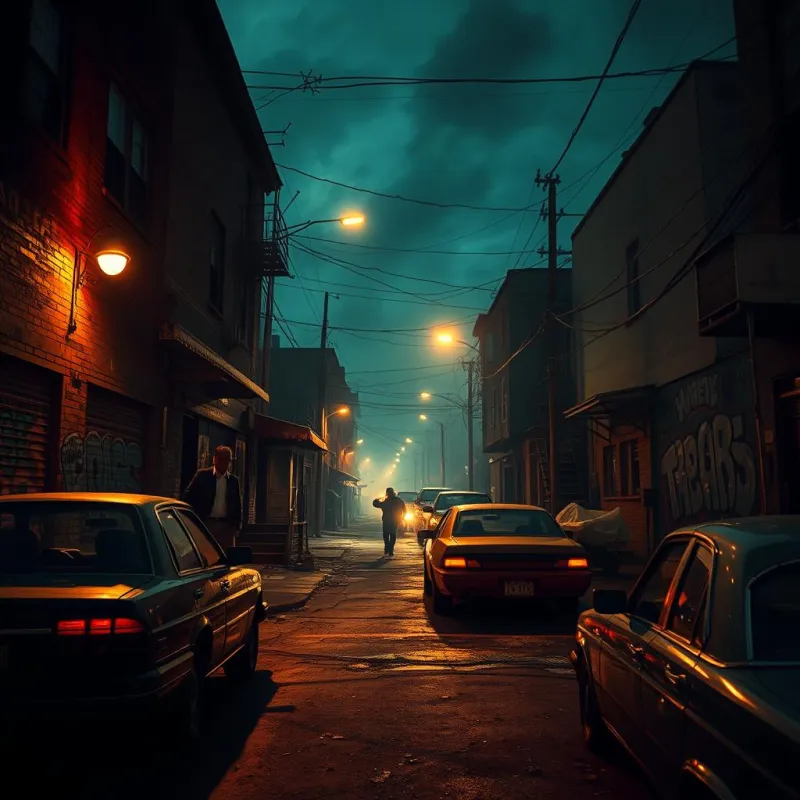
Photo: brothers loyalty urban street night city gritty, via files.idyllic.app
Hell's Kitchen has always had rules. Not the kind you find in a courtroom or a union contract—the kind passed down through cracked knuckles and hard lessons on cold pavement. For the Donnelly brothers, those rules weren't handed to them by a boss or a don. They built them themselves, one crisis at a time, and the result was something that looked a lot like a moral code. Messy, contradictory, and deeply human.
That's what made Black Donnellys so compelling to watch. It wasn't a show about organized crime in the traditional sense. It was a show about four brothers trying to survive a world that kept demanding they become something worse than they already were.
Family First — But What Does That Actually Mean?
The clearest pillar of the Donnelly code was family loyalty, and Tommy's relationship with Jimmy illustrated just how complicated that could get. Tommy was the reluctant one—the guy who wanted out, who had real artistic talent and a shot at something different. But every time Jimmy's chaos pulled him back in, Tommy went. Not because he was weak. Because walking away from your brother wasn't something the Donnelly code allowed.
This wasn't blind loyalty, though. There were moments in the series where Tommy pushed back hard against Jimmy's recklessness, where the tension between protecting your family and enabling their worst instincts became the entire dramatic engine of an episode. The code said family first, but it didn't say family without consequence. That distinction mattered enormously in how the brothers navigated every crisis they stumbled into.
Kevin and Sean occupied different positions in this hierarchy. Kevin was the comic relief who could also surprise you with genuine emotional depth. Sean was the youngest, the one the others were most instinctively protective of. But each of them had their own relationship with the code, their own version of what loyalty looked like in practice. The show was smart enough to let those versions conflict.
Street Ethics vs. Mob Logic
Here's where things get really interesting. Traditional organized crime structures—the Italian mob, the Irish mob outfits that had dominated Hell's Kitchen for decades—operated on a clear hierarchy. You had bosses, underbosses, capos, soldiers. Respect flowed upward. Orders flowed downward. Betrayal had a formal, almost bureaucratic consequence.
The Donnellys didn't fit that model, and the show leaned into that tension constantly. When they found themselves dealing with established mob figures, there was always this fundamental mismatch in operating logic. The mob guys understood leverage and territory. The Donnellys understood something older and harder to quantify—a street-level sense of who you owed and who you didn't, who had earned your respect and who was just demanding it.
This showed up most clearly in how the brothers handled disputes. Where a traditional crime family might resolve a conflict through channels—a meeting, a negotiation, a sanctioned hit—the Donnellys were more likely to act on instinct and deal with the fallout later. That made them unpredictable, which was sometimes an advantage and sometimes a catastrophe.
The Loyalty Test: Who Do You Protect When You Can't Protect Everyone?
Some of the series' most powerful moments came when the code forced an impossible choice. The Donnellys' world had a way of engineering situations where protecting one person meant sacrificing another, where the rules they lived by suddenly pointed in two different directions at once.
Think about the weight Tommy carried throughout the series. He was the one who could see the bigger picture, who understood what the street life was actually costing them, but he was also the one most bound by the code's demands. Every time he tried to pull back, the code pulled him forward. That's not weakness—that's a man trapped between the person he wanted to be and the obligations he genuinely believed in.
The show never let Tommy off the hook for his choices, and it never let the audience feel entirely comfortable rooting for him either. That moral ambiguity was baked into the Donnelly code itself. These weren't villains who occasionally did good things. They were fundamentally decent people who kept making choices that cost them their decency.
Where the Code Broke Down
Every code has its breaking point, and the Donnellys' was no different. The series—cut short as it was—did enough to show us where the cracks were forming. Jimmy's addiction was one. His hunger for respect that he hadn't fully earned created friction that the code couldn't easily absorb. Kevin's financial desperation created another set of vulnerabilities.
But the deepest crack was always the gap between what the code promised and what the world actually delivered. The Donnelly code was built on the idea that if you held your loyalty tight enough, if you protected your own fiercely enough, the math would eventually work out in your favor. Hell's Kitchen had a different answer to that proposition.
What the series captured so well was the tragedy of people who genuinely believed in something—a set of values, a way of operating—that the environment they lived in was designed to destroy. The code wasn't naive. It was just outnumbered.
Why It Still Resonates
Watching Black Donnellys now, the thing that hits hardest isn't the violence or the street politics. It's how recognizable the code is. Most of us have some version of it—people we'd go to the mat for, lines we tell ourselves we won't cross, a sense of what we owe the people who share our blood or our history.
The Donnelly brothers just lived theirs out in a context where the stakes were life and death. That's what made their unwritten rulebook feel so real, and what made watching it get tested, bent, and sometimes broken so genuinely painful.
Hell's Kitchen may have changed. The show may have ended too soon. But the code the Donnellys operated by? That one doesn't expire.