Before Walter White: How Tommy Donnelly Was the Anti-Hero TV Wasn't Ready For
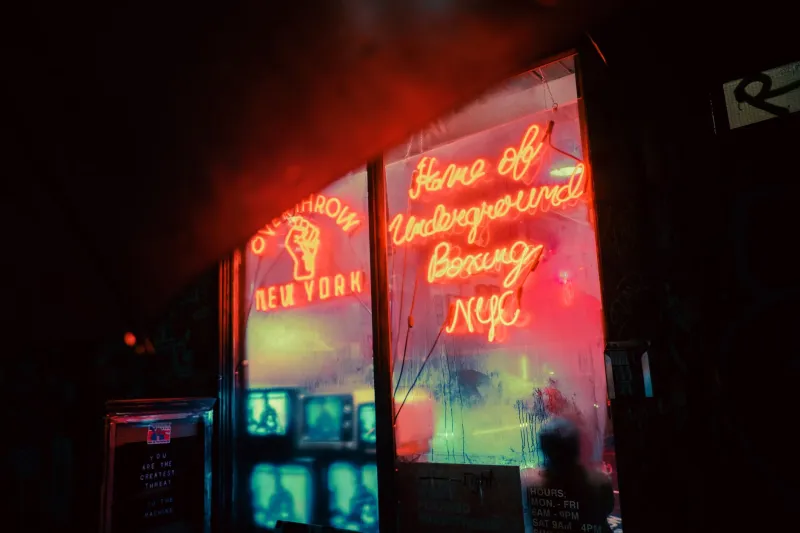
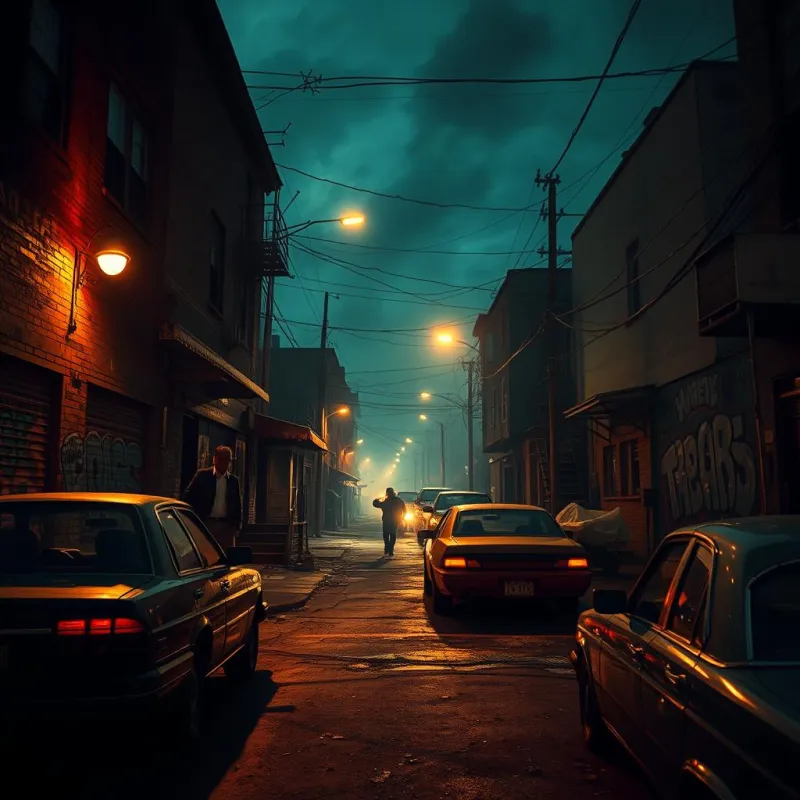
Let's set the scene. It's early 2007. NBC slides a gritty, blood-soaked drama about Irish-American brothers running the streets of Hell's Kitchen into the Monday night lineup. The show is raw, morally tangled, and anchored by a protagonist who is simultaneously the most decent and most dangerous guy in the room. Audiences weren't sure what to do with it. Critics were split. And after a single season, Black Donnellys was gone.
Then Breaking Bad happened. Then Justified. Then Ozark, Succession, Better Call Saul — an entire prestige television era built on the bones of the morally complex, charismatic criminal lead. Suddenly, what NBC couldn't figure out how to sell in 2007 became the defining currency of serious American television.
So let's ask the uncomfortable question: did Black Donnellys get there first? And does Tommy Donnelly deserve to be mentioned in the same breath as Walter White?
We think the answer is yes — and here's how we break that down.
The Blueprint Nobody Acknowledged
What makes an anti-hero work on television isn't just that the character does bad things. Plenty of shows had villains before 2007. The real innovation of the so-called golden age of TV anti-heroes was specificity — the idea that a character could be understandable, even rootable, while doing genuinely terrible things. The audience isn't supposed to approve. They're supposed to feel the pull anyway.
Tommy Donnelly operated exactly inside that tension. He wasn't a gangster by ambition. He was a kid who wanted to be a painter, who dreamed of something cleaner, who kept getting dragged back into the orbit of his brothers' chaos. Every step deeper into Hell's Kitchen's criminal underworld was framed as a choice made for love — for Kevin, for Jimmy, for Sean, for the neighborhood itself. The show made you feel the weight of every compromise Tommy made, and it never let him off the hook for making them.
That is precisely the emotional architecture that Breaking Bad would perfect two years later with Walter White. The difference is that Vince Gilligan had six seasons to develop it. Tommy Donnelly had thirteen episodes.
Charisma as a Moral Trap
One of the sneakier things Black Donnellys did — and something the show rarely gets credit for — was weaponizing Tommy's likeability against the audience. Jonathan Tucker played Tommy with this quiet intensity, a kind of stillness that made him magnetic even when he was doing something indefensible. You wanted to trust him because he seemed trustworthy. That's the trap.
This is a technique prestige TV has since refined into an art form. Think about how Justified used Timothy Olyphant's effortless cool to make Raylan Givens' recklessness feel like charm. Think about how Bob Odenkirk's Jimmy McGill made you genuinely root for a man you knew was sliding toward becoming Saul Goodman. The charismatic lead who makes bad choices feel reasonable — that's a very specific and very difficult needle to thread.
Black Donnellys threaded it in its pilot episode and never stopped. The show understood that the most effective anti-heroes aren't the ones you hate — they're the ones you can't stop watching even when you probably should.
Hell's Kitchen as a Character, Not a Backdrop
Another piece of the anti-hero puzzle that later shows would lean into hard is the idea of environment as fate. The setting isn't just where the story happens — it's a force that shapes what's possible for the characters. You can't fully separate Walter White from Albuquerque, or Tony Soprano from New Jersey, or Boyd Crowder from Harlan County.
For the Donnelly brothers, Hell's Kitchen wasn't a backdrop. It was an inheritance. The neighborhood had its own rules, its own loyalties, its own memory — and the show took that seriously. Growing up Irish-Catholic in that specific pocket of Manhattan meant something. It meant you owed debts before you were old enough to understand them. It meant the street had a claim on you.
That sense of place-as-destiny is something Black Donnellys established early and committed to fully. The brothers weren't just criminals — they were products of a very particular ecosystem, and the show never pretended otherwise. That kind of contextual moral complexity was genuinely ahead of its time for network television in 2007.
What NBC Got Wrong About Its Own Show
Here's where it gets a little frustrating, honestly. Part of why Black Donnellys never got the cultural recognition it deserved as a forerunner of prestige TV is that NBC didn't quite know how to position it. The network seemed uncertain whether it had a crime drama, a family saga, or something in between — and that uncertainty showed up in how the show was marketed and scheduled.
The cable networks that would later dominate the anti-hero era — AMC, FX, HBO — had a structural advantage: they could afford to be patient with challenging material. They could let audiences find a show. NBC was playing by different rules in a different era, and Black Donnellys paid the price for that mismatch.
It's worth noting that when the show was pulled from the NBC schedule and moved to streaming on NBC.com — one of the early experiments in what we'd now call online-first distribution — it actually found an audience. People sought it out. That's not nothing. That's a signal that the show had something real, something that connected, even if the traditional broadcast model couldn't capture it.
Giving Credit Where It's Owed
The conversation around TV anti-heroes almost always starts with Tony Soprano and ends somewhere around Walter White or maybe Kendall Roy. That's a legitimate lineage. But there are shows that existed in the margins of that timeline that were doing the same work, taking the same risks, and not getting the same runway to prove it.
Black Donnellys is one of those shows. Tommy Donnelly is one of those characters — a guy who wanted out and kept choosing in, who carried the violence of his world with visible grief, who made the audience complicit in his choices without ever quite letting them feel good about it.
That's anti-hero storytelling. That's the thing prestige TV spent the next decade perfecting. And it was happening in Hell's Kitchen in 2007, on NBC, in a show most people have half-forgotten.
Maybe it's time to remember it properly.