Streets Soaked in History: Did Black Donnellys Actually Get Hell's Kitchen Right?
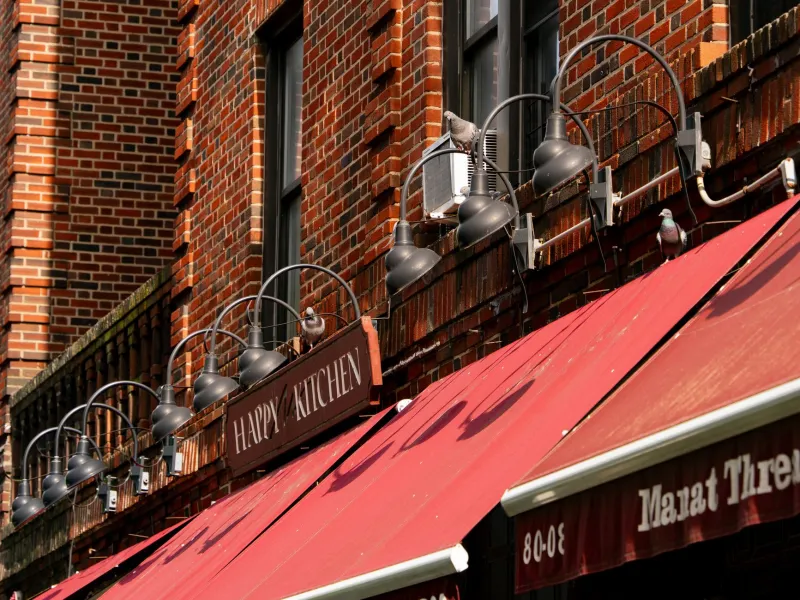
If you grew up watching The Black Donnellys, you probably fell in love with the show's atmosphere just as much as its characters. That cramped, volatile version of Hell's Kitchen — with its Irish mob loyalties, corner-store rivalries, and barely-contained street violence — felt lived-in and real. But how much of it actually was real? Pull up a chair, because we're taking a serious look at the neighborhood that shaped Tommy, Jimmy, Kevin, and Sean, and comparing the show's version to the documented history of one of New York City's most notorious ZIP codes.
Hell's Kitchen Before the Condos
Today, the stretch of Manhattan west of Eighth Avenue between roughly 34th and 59th Streets is packed with trendy restaurants and luxury apartments. But rewind to the 1970s and 1980s, and you're looking at a completely different world. Hell's Kitchen — sometimes called Clinton, though locals rarely used that sanitized nickname — was one of the most densely populated and economically depressed neighborhoods in the entire city. Unemployment was high, housing stock was deteriorating, and organized crime had deep, generational roots in the community.
The neighborhood's Irish-American population had been dominant since the mid-1800s, and by the 20th century, that demographic reality had translated directly into criminal infrastructure. The Westies, a notoriously brutal Irish-American gang, operated out of Hell's Kitchen from the 1960s through the late 1980s and became one of the most feared organized crime outfits in the city — not because of their size, but because of their sheer willingness to use extreme violence. FBI records and court documents from the era paint a picture of a gang that dismembered bodies in Hell's Kitchen apartments and maintained an uneasy, sometimes explosive alliance with the Gambino crime family.
The Black Donnellys never explicitly names the Westies, but the show's depiction of a tight-knit Irish crew operating in the neighborhood — answering to Italian mob bosses while maintaining their own fierce territorial pride — tracks almost perfectly with that documented history.
Where the Show Gets It Right
Let's give credit where it's due. The show's writers, Paul Haggis and Robert Moresco, clearly did their homework on the neighborhood's social dynamics. A few things stand out as genuinely accurate.
The Italian-Irish power structure. In the real Hell's Kitchen of the 1980s, Irish gangs weren't fully independent operators. They frequently worked under or alongside Italian crime families, creating a complicated hierarchy of loyalty and resentment. The show captures that tension beautifully — the Donnellys are always navigating between their own community's expectations and the demands of Italian bosses who see them as useful but ultimately replaceable muscle.
The insular neighborhood culture. One of the most consistent things real Hell's Kitchen residents from that era describe is how self-contained the neighborhood felt. People rarely left, grudges lasted decades, and everyone knew everyone else's business. The show absolutely nails this. The Donnellys aren't operating in some abstract criminal underworld — they're embedded in a community where the guy they roughed up last Tuesday is sitting next to their mom at church on Sunday.
Economic desperation as a driver. The show doesn't glamorize the reasons these guys end up in crime. The Donnelly brothers aren't aspiring to be Scarface. They're trying to pay rent, protect their family, and survive in a neighborhood where legitimate opportunity was genuinely scarce. That economic reality is historically accurate for Hell's Kitchen in the 1980s, where deindustrialization had gutted working-class livelihoods.
Where the Writers Took Some License
Of course, this is a television drama, not a documentary. And there are places where The Black Donnellys leans into narrative convenience over strict historical accuracy.
The timeline is a little slippery. The show's setting feels like it could be anywhere from the mid-1980s to the early 1990s, but it doesn't commit hard to a specific year. That's probably intentional — pinning the story to a precise date would invite closer scrutiny. In reality, Hell's Kitchen's criminal landscape shifted dramatically between 1985 and 1995. The Westies were largely dismantled by federal prosecution in the late 1980s, and by the early 1990s, the neighborhood was beginning the long, slow process of gentrification that would eventually transform it entirely.
The gang dynamics are simplified. Real Hell's Kitchen in the 1980s was messier and more fragmented than the show depicts. There were multiple competing Irish factions, internal betrayals that went beyond anything the show dramatizes, and a level of chaos that would have been genuinely difficult to translate into coherent TV storytelling. The show consolidates this into a more legible structure, which makes for better drama but isn't quite the full picture.
The violence, while brutal, is stylized. The real Westies were documented as committing acts of violence that were, frankly, too extreme for network television. The show's violence is visceral and serious, but it still operates within certain dramatic conventions. The actual historical record is considerably darker.
The Neighborhood as Character
What The Black Donnellys gets most right, maybe, is something harder to quantify than specific facts. It captures the feeling of a neighborhood in the process of losing itself — a community where old loyalties were being tested by new pressures, where the code that had governed street life for generations was starting to crack under the weight of federal prosecution, economic change, and the arrival of outside money.
Hell's Kitchen in the show feels like a place that knows its days are numbered, even if the people living there don't fully see it yet. That's historically resonant. By the time the 1990s arrived, the real neighborhood was already changing in ways that would have been unimaginable to the guys who ran those streets in 1983.
The Verdict
For a network drama that had to balance historical texture with mainstream accessibility, The Black Donnellys did a genuinely solid job of grounding itself in the reality of Hell's Kitchen's criminal past. It's not a history lesson, and it was never trying to be. But the bones of the show — the power dynamics, the community insularity, the complicated relationship between Irish street crews and Italian organized crime — are rooted in something real.
If you want to go deeper on the actual history, court records from the Westies prosecutions and T.J. English's book The Westies are essential reading. They'll make you look at the Donnelly brothers with fresh eyes — and probably make you appreciate just how much dramatic restraint the show's writers actually exercised.